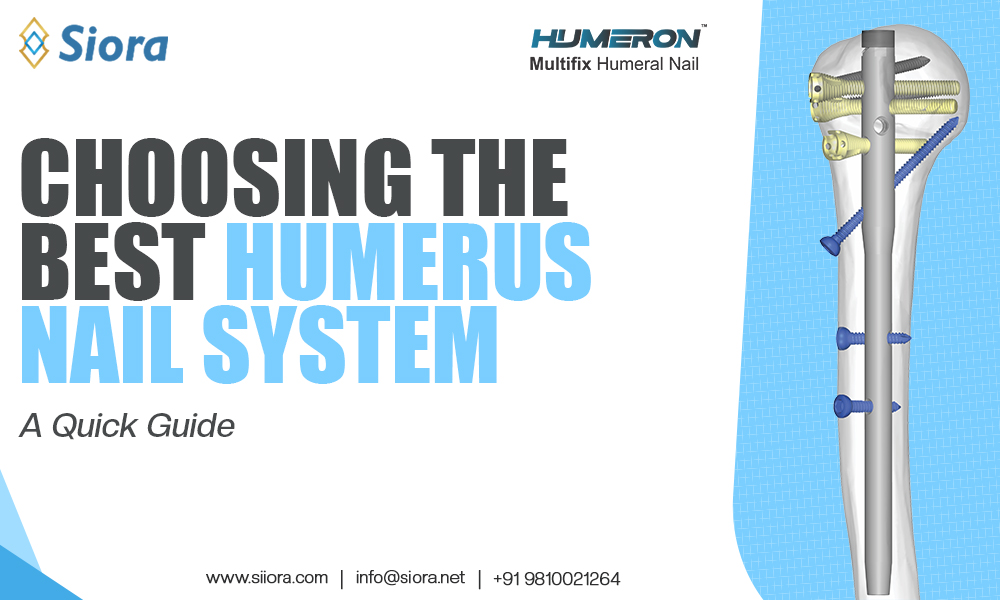
Treating humeral fractures is not always straightforward. Some fractures are simple and stable, while others are highly displaced or involve poor bone quality. In such situations, the choice of implant can influence both healing and functional recovery. Among the available fixation methods, humeral nail systems are widely used because they provide stable fixation with less soft tissue disruption.
However, not every humerus nail system works the same way. Surgeons often consider several factors before selecting the right implant for a particular case.
Fracture Pattern Comes First
The type of fracture usually guides implant selection. A simple shaft fracture may not require the same nail design as a proximal humerus fracture with multiple fragments. Some nail systems are specially designed for proximal fixation, while others are better suited for fractures extending into the shaft.
Before choosing a system, it is important to evaluate fracture location, comminution, and bone quality. Selecting a nail without considering these details can make reduction and fixation more difficult during surgery.
Importance of Nail Design
Modern humerus nail systems are designed to match the natural anatomy of the bone. Earlier nail designs were more generic and sometimes caused alignment issues. Today, anatomical nails with better curvature and multiple locking options have improved surgical outcomes.
A good nail system should allow easy insertion and stable fixation without creating excessive stress on the bone. Proximal and distal locking options should also provide enough flexibility for different fracture patterns.
Material Quality Matters
The material of the implant also plays an important role. Titanium nails are commonly preferred because they are lightweight, corrosion-resistant, and more compatible with bone mechanics. They also create fewer imaging artifacts during follow-up scans.
Stainless steel nails are still used in many cases and provide strong fixation, but titanium systems are often considered more suitable for long-term comfort and biological healing.
Ease of Surgical Technique
A surgeon-friendly nail system can make a significant difference in the operating room. Instruments should be easy to handle, and the locking mechanism should allow accurate screw placement without unnecessary complications.
Difficult instrumentation can increase operative time and frustration during surgery. This is why many surgeons prefer systems that offer simple targeting devices and reliable locking accuracy.
Stability and Early Mobilization
One of the main goals of humeral nailing is to achieve stable fixation that allows early movement. Shoulder and elbow stiffness can become a major problem if rehabilitation is delayed for too long.
A reliable humerus nail system should provide enough stability to support early physiotherapy while maintaining fracture alignment. Proper proximal and distal locking strength is especially important in osteoporotic bone.
Postoperative Follow-Up and Implant Performance
The best nail systems are not judged only during surgery but also during recovery. Consistent healing, minimal complications, and patient comfort are all signs of a well-designed implant.
Surgeons also look for systems with a good clinical track record and dependable implant quality. Poor-quality implants may increase the risk of screw loosening, implant failure, or delayed union.
Final Thoughts
Choosing the best humerus nail system involves more than selecting a familiar implant. Fracture type, implant design, material, fixation stability, and ease of use all play an important role in achieving successful outcomes. While several systems are available today, the ideal choice is usually the one that offers reliable fixation while respecting bone biology and allowing smoother recovery for the patient.
Siora Surgicals Pvt. Ltd. is one of the leading orthopedic manufacturers in India, including the advanced HUMERON Humeral Nailing System.


Leave a comment